A Botanist by Any Other Name: The Strange Case of Dr. Cirillo and Mr. Famitz
By Amedeo Arena
On January 16, 1769, a letter from Naples was read at a meeting of the newly united American Philosophical Society in Philadelphia. Its author, Domenico Cirillo, thanked the physician John Morgan for proposing him as a member and offered to help advance the Society’s work. He suggested introducing useful Italian plants into America, including a species suitable for animal fodder. It was precisely the kind of practical exchange the Society encouraged. Yet the membership records contained no Domenico Cirillo.
Instead, they listed a mysterious “Professor Famitz of Naples.” For more than 250 years, this name concealed the identity of a distinguished Neapolitan botanist, physician, and future republican. Recovering that identity would require following a trail through diplomatic correspondence, hurried elections, and the rivalries of Philadelphia’s scientific community. It would also reveal how closely Naples and America were connected before the Declaration of Independence.
Born in 1739 in what is now Grumo Nevano, Cirillo grew up within a family devoted to medicine and natural history. He graduated in medicine at twenty and became professor of botany at the University of Naples the following year. He promoted the classification system developed by Carl Linnaeus, with whom he exchanged letters and seeds. His scientific reputation crossed the Atlantic: the botanist Alexander Garden named the American plant genus Cyrilla in his honor.
Cirillo belonged to the Republic of Letters, the international community through which scholars circulated observations, specimens, and books. John Morgan moved within the same world. After studying medicine in Edinburgh, the Philadelphia physician traveled across Europe, reaching Naples in 1764. Whether the two men met remains uncertain. Morgan’s surviving itinerary and Cirillo’s departure for Sicily suggest that they may have missed one another. Their subsequent connection illustrates how correspondence could sustain intellectual relationships without a documented personal encounter.
The crucial intermediary was Isaac Jamineau, the British consul in Naples. Writing to Morgan on November 3, 1767, he recommended his family physician, describing him as the local professor of botany responsible for introducing Linnaeus’s system. That description pointed to Cirillo. Jamineau proposed bringing the two physicians into correspondence. A few months later, on April 15, 1768, the American Society for Promoting Useful Knowledge elected a corresponding member recorded as “Mr. Famitz.” Charles Thomson signed the membership certificate, which remained unsent.
The institutional name matters. Philadelphia then had competing learned societies. The older Philosophical Society, founded in 1743 with Benjamin Franklin’s involvement, had experienced a long period of inactivity. The newer American Society, established in 1766 and supported by Morgan and Thomson, attracted ambitious younger members. Morgan also founded a Medical Society. Professional rivalries overlapped with political and religious divisions, and recruiting distinguished members became a means of asserting prestige. During 1768, elections multiplied as the societies competed for influence.
In December, the American Society and the Philosophical Society merged. Franklin became president of the united institution, but the distribution of offices required delicate compromises. It was against this unsettled background that Cirillo’s letter of thanks was read in January 1769. The discrepancy between the real correspondent and the unfamiliar name in the records went uncorrected. The episode shows how an international scientific network could function successfully while its administrative record preserved a fundamental mistake.
The historian Whitfield J. Bell Jr., a former APS librarian, assembled essential pieces of the puzzle. Unable to find convincing evidence that a Neapolitan professor named Famitz had existed, he connected the mysterious member with Cirillo and Jamineau’s letter. The likely source of the error was a misreading: “My Family Physician” had become “Mr Famitz Physician.” A description of someone’s relationship to the consul had apparently been transformed into a personal name.
Building on Bell’s research, a fresh examination of Jamineau’s letter, obtained from the Historical Medical Library of the College of Physicians of Philadelphia, supported the reading “Family.” A possible explanation is that Morgan understood whom Jamineau meant, while the person who actually processed the nomination misread the handwriting. This would explain why Cirillo, rather than an unknown Famitz, subsequently thanked Morgan.
Nor can we know exactly why the mistake survived. Rapid recruitment may have encouraged administrative oversight. The fragile settlement between rival societies may also have discouraged scrutiny of earlier records. What is certain is that Cirillo’s scientific offer reached Philadelphia under his own name, while the membership rolls continued to preserve another.
Cirillo’s later career united scientific distinction with concern for suffering. He became professor of medicine, treated poor patients without charge, and sought to improve clinical practice. During the Neapolitan Republic of 1799, he proposed a national charity program combining medical assistance, financial support, and opportunities for work. He eventually presided over its Legislative Commission. After the monarchy’s restoration, he was executed on October 29, 1799. His home was pillaged and his scientific collections dispersed.
In autumn 2022, the evidence and this reconstruction were submitted to the APS, alongside a public petition supported by scholars, institutions, and Italian Americans. The Society corrected its records on January 3, 2023, announcing the decision on February 9. Cirillo’s election was recognized under his rightful name, effective from April 15, 1768. He thereby recovered his place as its first Italian corresponding member.
A commemorative plaque installed in Aversa in 2025 now marks Cirillo’s election and its belated recognition. Like the later correspondence between Gaetano Filangieri and Benjamin Franklin, his story reveals an Enlightenment sustained by the exchange of useful knowledge and a shared commitment to human wellbeing. Recovering Cirillo’s name reconnects Naples and Philadelphia, scientific inquiry and public service, and the surviving archive with a history still coming into focus.
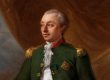
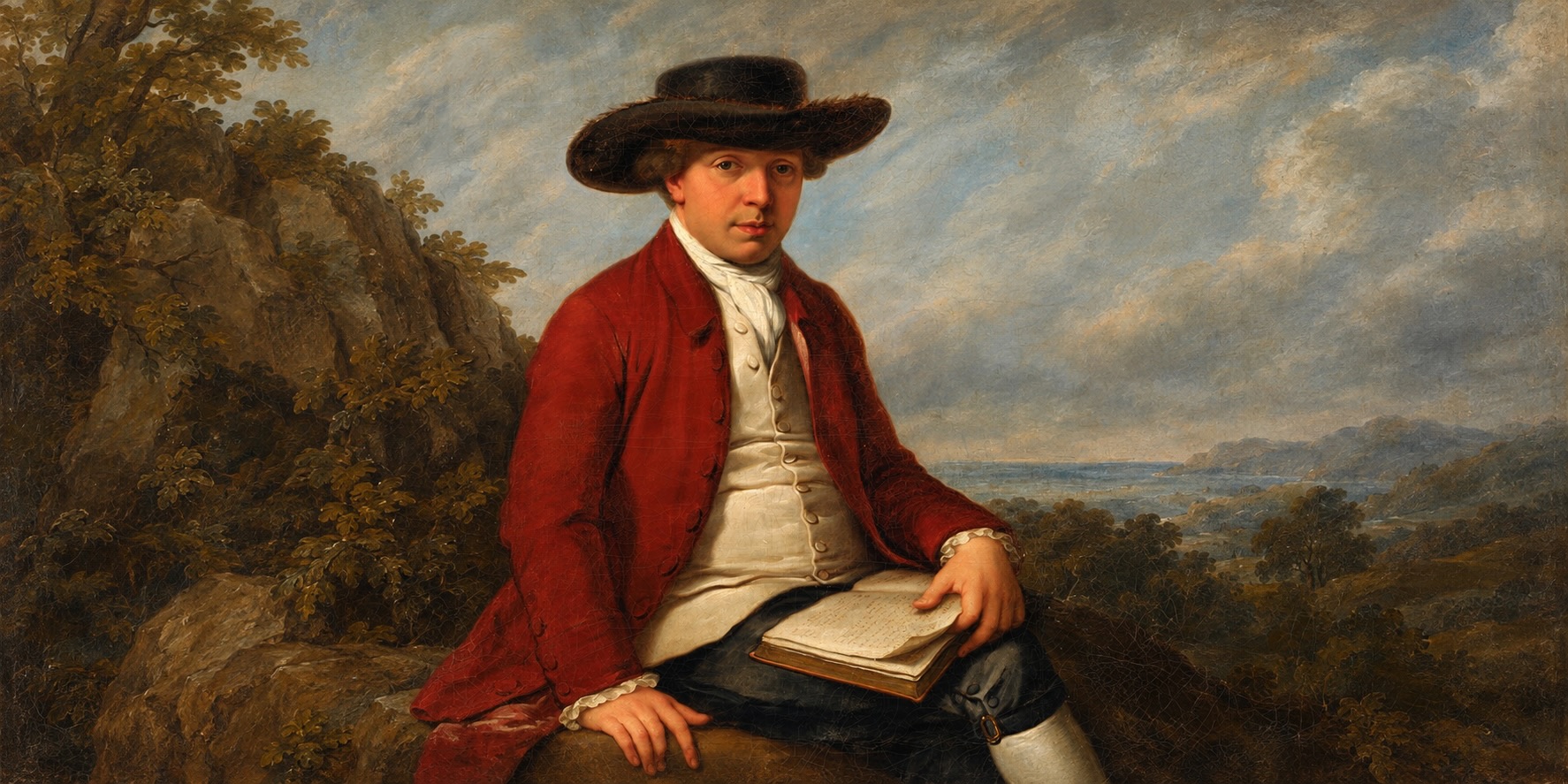
Image: Angelica Kauffman, Portrait of Domenico Cirillo (1784–1786), Museo Nazionale di San Martino, Naples; AI-extended.