
Beyond Crime and Punishment: Giacinto Dragonetti and Thomas Paine
By: Mariavaleria del Tufo*
In January 1776, Thomas Paine published Common Sense, the pamphlet that helped turn growing discontent with British rule into a powerful argument for American independence. Its attack on hereditary monarchy and its defence of representative government made it one of the most influential political writings of the American Revolution. Yet among the thinkers whose authority Paine invoked was a figure whose contribution to the American founding is rarely remembered today: Giacinto Dragonetti, an Italian jurist associated with the Neapolitan Enlightenment.
As Common Sense rapidly became a phenomenal bestseller, read aloud in taverns and widely circulated throughout the American colonies, Dragonetti’s presence in its pages offered a remarkable example of the transatlantic circulation of political ideas. More importantly, it invites us to reconsider a fundamental question that concerned Enlightenment reformers on both sides of the ocean: should the law merely prevent wrongdoing, or should political institutions also encourage citizens to contribute to the common good?
Born in L’Aquila in 1738, Dragonetti developed his intellectual outlook within the vibrant culture of eighteenth-century Naples, where Antonio Genovesi had placed civil economy, public happiness and social responsibility at the centre of philosophical inquiry. Dragonetti’s most celebrated work, Delle virtù e de’ premi (On Virtues and Rewards), published in Naples in 1766, approached the relationship between law and human conduct from an original perspective.
Two years earlier, Cesare Beccaria had published Dei delitti e delle pene (On Crimes and Punishments), challenging the cruelty and arbitrariness of criminal justice. Beccaria argued that punishment should be necessary, proportionate and directed towards preventing crime rather than satisfying a desire for retribution. His work became a landmark in the development of modern criminal law.
Dragonetti addressed the other side of the same problem. If governments devoted so much attention to punishing offences, why did they establish so few mechanisms for rewarding virtue? In his view, a legal system concerned exclusively with wrongdoing overlooked an essential dimension of collective life: the positive contribution that individuals could make to society.
For Dragonetti, virtue was not simply obedience to the law. It was a generous effort, independent of legal compulsion, to benefit others. The distinction remains significant. Criminal law can prohibit harmful conduct and establish the consequences of violating its commands. It cannot, however, require every act of generosity, public service or civic responsibility upon which a flourishing community depends.
This is why Dragonetti regarded rewards as an indispensable complement to punishment. Public recognition, honours and other forms of reward could acknowledge and foster virtuous conduct, without reducing it to a response to material incentives. Properly conceived, rewards would not merely celebrate exceptional conduct after the event; they could help shape a political community in which service to others became a recognised public value.
His argument also contained a criticism of inherited privilege. Dragonetti questioned the assumption that the achievements of ancestors should automatically confer distinction upon their descendants. Genuine honour ought to reflect personal merit and contributions to society, rather than hereditary status. Such ideas resonated with a broader Enlightenment challenge to traditional hierarchies and with the emerging republican conviction that public office and civic distinction should not be determined by birth.
Dragonetti’s work soon travelled beyond Italy. Translated into several European languages, it appeared in English in London in 1769 under the title A Treatise on Virtues and Rewards. The translation made his ideas accessible to an English-speaking readership engaged in increasingly intense debates about political authority, liberty and the purposes of government.
Seven years later, his name appeared in Common Sense.
The circumstances of Paine’s reference are especially revealing. Having argued against British monarchy, Paine turned to the institutions that might govern an independent America. He proposed a continental conference entrusted with drafting a constitutional charter, establishing the foundations of a new political order.
At precisely this point, Paine introduced Dragonetti as “that wise observer on governments”, before quoting a passage identifying the task of political science as discovering the form of government capable of securing the greatest individual happiness and freedom at the lowest national expense.
The choice was significant. Paine did not invoke Dragonetti merely as a theorist of rewards. He selected a passage that expressed a broader conception of political legitimacy: government should be evaluated according to its contribution to the welfare and liberty of those subject to it.
An idea developed within the Neapolitan Enlightenment thus entered the debate over the constitutional future of the American colonies. Dragonetti’s reflections on good government were placed before readers confronting the possibility of establishing an entirely new political system.
The location of the quotation makes the connection still more striking. Shortly afterwards, Paine asked who should be the king of America. His answer rejected the premise of personal sovereignty: in America, the law itself should be king.
The proximity of these passages does not establish that Dragonetti inspired Paine’s republican constitutionalism. Nor does it demonstrate that Dragonetti’s writings directly influenced the Declaration of Independence, adopted later that year. Such conclusions would require evidence beyond the quotation itself.
What the text establishes is nevertheless important. Paine consciously incorporated Dragonetti’s political thought into one of the most consequential arguments for American independence. The Italian author supplied a principle by which the institutions of a prospective republic might be judged: their capacity to reconcile individual freedom, public happiness and the burdens of government.
This connection also illuminates the relationship between criminal law and constitutional thought. Dragonetti’s original question concerned the limitations of a legal order organised around punishment. Yet his answer led towards a wider inquiry into the purposes of political institutions. If the law is to serve society, its success cannot be measured exclusively by its ability to suppress offences. It must also be considered in light of the conditions it creates for civic participation, social cooperation and human flourishing.
Paine’s use of Dragonetti shows how an argument arising from the reform of legal institutions could acquire new significance in a revolutionary constitutional setting.
The episode belongs to a larger history of intellectual exchanges between the Italian Enlightenment and the American founding. Benjamin Franklin’s correspondence with Gaetano Filangieri provides another celebrated example. But Dragonetti’s appearance in Common Sense reminds us that transatlantic connections were not limited to personal relationships between prominent thinkers. Books and translations could create equally consequential encounters.
As the United States marks the 250th anniversary of its independence, the rediscovery of Dragonetti offers an opportunity to look beyond familiar national narratives. His contribution was not to draft an American constitution or formulate the principles of independence. It was to articulate an understanding of government directed towards public happiness, individual freedom and civic virtue, which Thomas Paine considered worth sharing with the American people at a decisive historical moment.
The journey of Delle virtù e de’ premi from Naples to the pages of Common Sense reminds us that the American Revolution was also part of a wider conversation about the purposes of law and government. That conversation crossed borders and languages, connecting the reform of criminal justice in Enlightenment Italy with the creation of a new political order across the Atlantic.
* Mariavaleria del Tufo is Professor Emerita of Criminal Law at Suor Orsola Benincasa University of Naples.
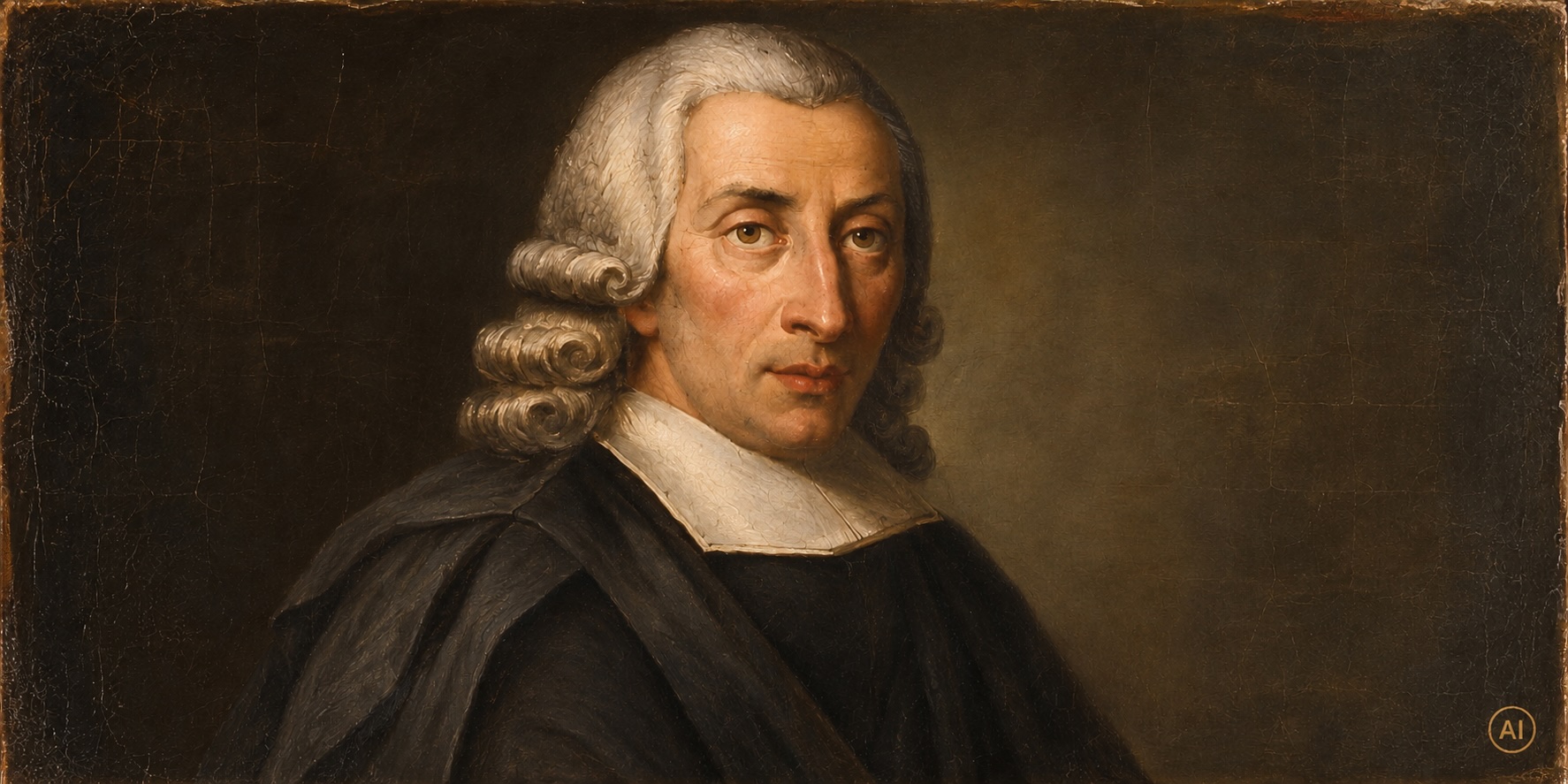
Image: AI-generated reconstruction of Giacinto Marchese Dragonetti, inspired by an 1847 engraving by Teresa Mazzella.