

In Pursuit of Human Happiness: The Life of Gaetano Filangieri (1753–1788)
By Amedeo Arena
Gaetano Filangieri’s life was a brief, brilliant flash across the eighteenth century. The rapid acclaim won by his Science of Legislation in Europe and America, followed by his death barely a month before his thirty-fifth birthday, helped establish an idealized image of a serene philosopher, obscuring the troubled man and the struggles that marked his life (Venturi 1962, p. 603).
Filangieri was born on August 22, 1753, in the family residence in Cercola, then part of San Sebastiano, three miles east of Naples, and was baptized the same day in the villa’s private oratory. The entry in the parish register of San Sebastiano, drawn up by the parish priest Pietro Ciaramella, records a child born “at half past one in the afternoon” (Cozzolino 2023, pp. 10–11).
Filangieri’s birth date long puzzled historians. In his 1785 letter to Count Tomitano, he wrote that he had been born on August 18, 1752 (Venturi 1962, p. 779). His first biographers repeated that date, and the epitaph on his tomb still calculates his age from it. Yet the parish register and his regiment’s muster rolls—which recorded his age as “6 years” at the end of 1759—establish 1753 as his actual year of birth (Ruggiero 2000, pp. 206–213).
One of eleven children of Cesare, prince of Arianello, and Marianna Montalto, Filangieri belonged to a family whose lineage reached back to the Norman conquest of southern Italy. Its founder, Angerius, son of Tichel, came to Italy around 1045 among the Norman knights and won the castle and fief of Sant’Adiutore by the sword. His sons, known as filii Angerii, or “sons of Angerius,” gave the family its name (Ruggiero 1999, p. 14; Tommasi 1788, p. V).
Filangieri’s family had retained its fame but lost much of its wealth. Once prominent in the medieval kingdom, the Filangieris had been deprived of their fiefs under Queen Joanna II’s Prammatica Filangeria, which transferred them to her favorite, Sergianni Caracciolo (Ruggiero 1999, p. 14). “I am a cadet of my family, whose fame is far greater than its riches,” Filangieri wrote in one of his letters (Venturi 1962, p. 776). His limited means would continue to constrain his choices throughout his life.
Like many younger sons of the military aristocracy, Filangieri was destined for a military career and was appointed a cadet before his fifth birthday (Ruggiero 2000, p. 212). Yet he showed little inclination for arms: a pacifist at heart, he soon embraced openly antimilitarist views (Maestro 1976, p. 8; Ruggiero 1999, pp. 106–107). Writing to Luigi Cremani, professor of criminal law at the University of Pavia, he complained of being “condemned to play the warrior in spite of myself” (Venturi 1962, p. 775).
Filangieri’s education came from his tutor Luca Nicola De Luca and from his own early reading (Venturi 1962, pp. 604–605). He described his intellectual formation to one of his correspondents: “Left to myself, once freed from my scholastic education, the first readings I did determined me toward the studies that still form the object of my labors” (Venturi 1962, p. 778).
His first work, the dissertation Della morale de’ legislatori (1772), explored the morality of legislation in eight sections, addressing subjects ranging from the preservation and tranquility of peoples to punishment, religion, and public education. Reviewing it in the Palermo journal Notizie de’ letterati on May 12, 1772, the Camaldolese abbot Isidoro Bianchi applauded the eighteen-year-old author for having drawn “from the best sources” of the century, from Montesquieu to Beccaria (Trampus 2004, pp. V–VI).
In 1773, Filangieri traveled to Palermo to visit his uncle Serafino, then archbishop of the city. He met Bianchi in person and was welcomed into the island’s learned academies (Venturi 1962, pp. 606–607). On September 19 and 20, the people of Palermo rose against the viceroy and acclaimed Serafino Filangieri in his place. He refused the appointment but helped restore order; a month later, the three ringleaders were hanged. Gaetano, who had witnessed the tensions firsthand, followed subsequent events from Naples through Bianchi’s letters (Ruggiero 1999, pp. 67–70).
After his return, he published the Riflessioni politiche (1774), a pamphlet dedicated to the minister Tanucci in praise of the royal law of September 23, 1774. The law required judges to base their judgments on the kingdom’s written laws rather than the “authorities of the doctors,” and to publish them. For the twenty-one-year-old Filangieri, limiting the arbitrary power of judges would promote legal certainty and, through it, the security and “social liberty” of citizens.
Having entered the court of Ferdinand IV of Naples in 1777 as maggiordomo di settimana (Venturi 1962, p. 613), Filangieri devoted most of his life to the study of legislation. “It is now fifteen years that I have occupied myself with nothing but this object,” he wrote in 1785; “few days of my life can I count on which I have laboured less than eleven hours” (Venturi 1962, p. 778). This sustained effort took shape in a work that would reach far beyond Naples.
The first two volumes of La scienza della legislazione appeared in Naples in 1780 and quickly won widespread acclaim (Venturi 1962, p. 620). By the end of the century, the treatise had been reprinted in Venice, Florence, Milan, and Catania, and translated into German (1784), French (1786), and Spanish (1787). In his survey of sixty-two editions of the work, the historian Antonio Trampus identifies three major waves in its European reception. The first coincided with the political debates of the 1780s, when readers struggled to obtain copies of the scarce Neapolitan editions (Trampus 2004, pp. XI–XII).
Success, however, came at a price. Filangieri’s bold proposals for reform provoked hostility from the local nobility and the Church. As early as 1781, he confided to his admirer Domenico Pepe that persecution by “certain monsters called barons,” far from discouraging him, had only strengthened his resolve. He would show that their “pretended rights” were “incompatible with private security and civil liberty” (Venturi 1962, p. 769). In Rome, proceedings opened by the Holy Office in February 1784 culminated in the work’s placement on the Index of Forbidden Books by a decree of December 7, 1784 (Trampus 2004, pp. XVI–XVII).
Admiration also reached Filangieri from beyond the kingdom’s borders. Pietro Verri hailed the work from Milan within weeks of its publication; the learned gazette of Göttingen praised the first volumes in June 1781; and the Economic Society of Bern elected its author to membership (Venturi 1962, pp. 620, 644, 650). Through the diplomat Luigi Pio, the work reached Benjamin Franklin in Paris. On September 11, 1781, Pio reported that Franklin found Filangieri’s ideas expressed with “great clarity and precision” and was eagerly awaiting the volumes on criminal legislation, “of special interest to his nation, still needing to be enlightened on this subject” (Venturi 1962, p. 773; Maestro 1976, p. 26).
Having learned of Franklin’s interest, Filangieri wrote to him on August 24, 1782, hinting at a secret he would reveal only under a promise of silence. On December 2, he wrote more openly, asking whether his work on legislation might prompt Franklin to invite him to Philadelphia to contribute to the “great code” being drafted in the United States. “Since childhood, Philadelphia has drawn my gaze,” he confessed; he had come to regard it as “the only country where I can be happy.”
Filangieri’s motives were also personal. A lady “whom I love to excess, and by whom I am equally loved” had resolved to marry him, but his poverty was the sole obstacle to their marriage in Naples. In Philadelphia, he believed, his modest means would allow the couple to lead “a life equally removed from splendor and from want” (Venturi 1962, pp. 773–777).
Franklin replied on January 11, 1783, praising Filangieri’s “excellent work” but explaining that he had “no orders or authority of any kind to encourage strangers with expectations of employment by our government.” Instead, he suggested that Filangieri visit America as a trade envoy of the Kingdom of Naples (Lo Sardo 1999, pp. 238–239; Maestro 1976, p. 27).
No such mission was ever entrusted to him, and Philadelphia remained a dream. He did, however, marry the lady of his letters. She was Charlotte Frendel, born around 1751 in Pressburg into the lesser Hungarian nobility and well regarded in Viennese learned circles. In 1780, the Habsburg empress Maria Theresa had chosen Frendel as governess to her granddaughter Maria Luisa, the seven-year-old daughter of King Ferdinand IV of Naples and Queen Maria Carolina of Austria, and sent her from Vienna to the Neapolitan court (Ruggiero 1999, pp. 144–155).
Filangieri and Frendel were married on July 27, 1783, in the queen’s private oratory. That same morning, they left for La Cava, today Cava de’ Tirreni, twenty-five miles southeast of Naples (Ruggiero 2000, p. 213; Ruggiero 1999, pp. 256–258). There, Filangieri completed the volumes on criminal legislation (1783) and the three volumes on education (1785), “fruits of this solitude,” as he told Franklin (Venturi 1962, p. 636). Admirers traveled to La Cava to meet him, among them Goethe in March 1787 (Venturi 1962, p. 643).
Appointed to the Supreme Council of Finances in Naples on March 23, 1787, Filangieri took an active part in the work of reform. On March 30, 1788, he submitted an opinion on the Tavoliere di Puglia, the vast Apulian plain whose pastures the state had for centuries leased to the owners of transhumant flocks through annual auctions. Such yearly leases, Filangieri argued, left tenants in a precarious position and opened the door to fraud. He therefore proposed that the pastures be leased for six years at a time. The reform was deliberately limited, since he knew he could not yet “break and undo the erroneous chain” of the state monopoly. Nevertheless, he conceived it as a first step toward permanent tenure and, ultimately, the transfer of the land to the leaseholders (Venturi 1962, pp. 652–653).
In the spring of 1787, Filangieri took his family to Vico Equense, a coastal town on the Sorrento Peninsula some twenty-five kilometers southeast of Naples, to rest at the castle of his brother-in-law Filippo Ravaschieri, prince of Satriano. His own health, worn down by years of relentless work, was already failing (Venturi 1962, pp. 627, 652). From there, on June 14, 1788, he wrote his last surviving letter, addressed to his friend Donato Tommasi: “My health is not good. That of my wife and children is excellent. Roberto is like a flower. Come. I have many things to tell you” (Lo Sardo 1999, p. 297). Franklin’s last letter, dated October 14, 1787, requested eight copies of each volume of Filangieri’s “invaluable work” and enclosed a copy of the newly proposed Constitution of the United States. It reached him at the castle of Vico Equense on July 1, 1788, the first day of his final illness (D’Agostini 2011, pp. 41–42).
Filangieri died shortly before midnight on July 21, 1788, not yet thirty-five, in the company of his friends Francesco Mario Pagano and the physician Domenico Cirillo, who had rushed to Vico Equense to bid him a final farewell. Contemporaries called his death “a public calamity” (Ruggiero 2022, pp. 77–78; Venturi 1962, p. 654). His widow informed Franklin of the loss that September: a cruel illness had carried off her husband in the flower of his age, “and with him all my happiness” (Lo Sardo 1999, p. 298; D’Agostini 2011, p. 42).
Filangieri’s ideals, like seeds carried by the wind, germinated in distant places and later generations, through successive revolutionary and liberal waves of interest in his treatise (Trampus 2004, p. XII). In Naples, his friend Mario Pagano incorporated them into the draft constitution of the Neapolitan Republic of 1799 (Trampus 2008). In France, where admirers called him “the Montesquieu of Italy,” his writings found echoes in the revolutionary assemblies, and Napoleon referred to him as “notre maître à tous” (Venturi 1962, p. 649). In Russia, his writings passed from reformers to the Decembrists, while Spanish liberals reprinted his work in 1813 and again in 1822 (Venturi 1962, pp. 645–647, 650–651).
Benjamin Constant’s commentary helped carry Filangieri’s work into the liberal age (Venturi 1962, pp. 655–56). His work continued to be cited in post-unification Italy: Filangieri was invoked repeatedly in the Parliament of the Kingdom of Italy, the Constituent Assembly, and later the Parliament of the Republic (Riberi 2024, pp. 237 ff.). Filangieri was also mentioned in U.S. congressional proceedings on two notable occasions: in 1936, Representative Charles R. Eckert of Pennsylvania cited The Science of Legislation in remarks on economic reform (Congressional Record, 74th Cong., 2nd sess., vol. 80, 24 April 1936, p. 6123); in 2011, Representative Patrick J. Tiberi of Ohio named him among the Italian figures linking Italy and the United States, in remarks commemorating the 150th anniversary of Italian unification (Congressional Record, 112th Cong., 1st sess., 17 March 2011, p. E512).
Two and a half centuries after the Declaration of Independence proclaimed the right to “the pursuit of happiness” inalienable, Filangieri’s call to “complete the work of human happiness” continues to resonate on both sides of the Atlantic.
Sources cited: B. Cozzolino, Il Comune di San Sebastiano al Vesuvio al Cavalier Gaetano Filangieri, Napoli, 2023; M. D’Agostini, Gaetano Filangieri e Benjamin Franklin, Washington, 2011; E. Lo Sardo, Il mondo nuovo e le virtù civili. L’epistolario di Gaetano Filangieri, Napoli, 1999; M. Maestro, “Gaetano Filangieri and His Science of Legislation,” Transactions of the American Philosophical Society, vol. 66, no. 6, 1976; M. Riberi, “La Scienza della legislazione alla Camera dei deputati dal Regno di Sardegna all’Italia repubblicana,” in A. Arena (ed.), Cittadino di tutti i luoghi, contemporaneo di tutte l’età: l’universalità del pensiero di Gaetano Filangieri, Napoli: Editoriale Scientifica, 2024, pp. 237–255. G. Ruggiero, Gaetano Filangieri. Un uomo, una famiglia, un amore nella Napoli del Settecento, Napoli, 1999; G. Ruggiero, “La data di nascita di Gaetano Filangieri: un problema risolto,” Archivio Storico per le Province Napoletane, vol. CXVIII, 2000; G. Ruggiero, Scheletri svelati, Napoli, 2022; D. Tommasi, Elogio storico del cavaliere Gaetano Filangieri (1788), reprinted in G. Filangieri, La scienza della legislazione e gli opuscoli scelti, vol. I, Firenze: Niccolò Conti, 1820; A. Trampus, “La genesi e le edizioni della «Scienza della legislazione»,” in G. Filangieri, La scienza della legislazione, critical edition directed by V. Ferrone, vol. VII, Venezia, 2004; A. Trampus, Il diritto alla felicità. Storia di un’idea, Roma–Bari: Laterza, 2008; F. Venturi, “Gaetano Filangieri. Nota introduttiva,” in Illuministi italiani, vol. V, Riformatori napoletani, Milano–Napoli, 1962; U.S. Congress, *Congressional Record*, 24 April 1936, p. 6123 (Charles R. Eckert), and 17 March 2011, p. E512 (Patrick J. Tiberi).
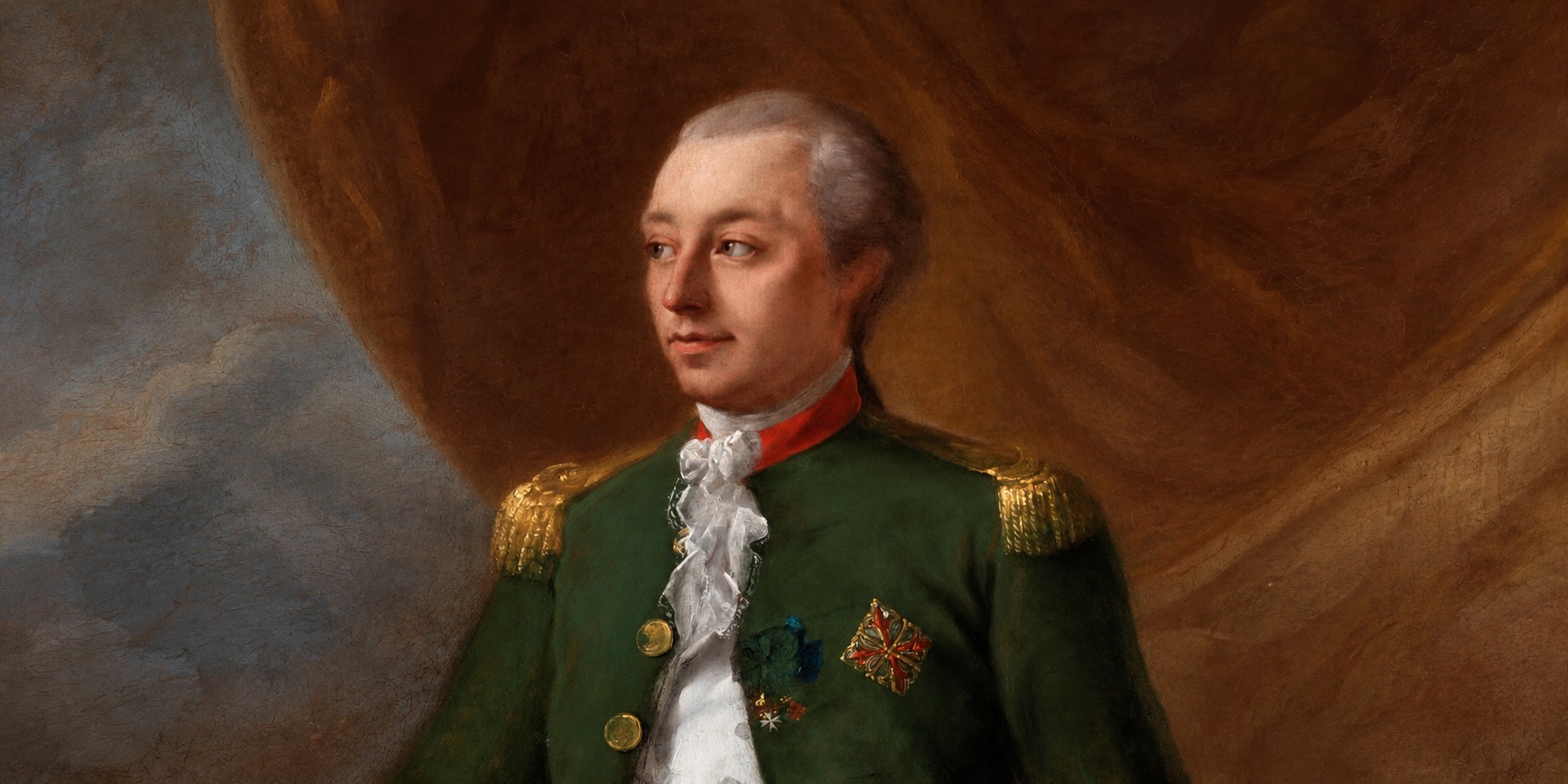
Image: Giuseppe Bonito, Portrait of the Jurist Gaetano Filangieri (detail), oil on canvas, 1785–1788. On display at the Museo Civico Filangieri, courtesy of Galleria Porcini. AI-extended.